AI Won't Steal Your Job, It'll Rewrite the Rules of Work. Here are 4 Ways You Aren't Expecting.
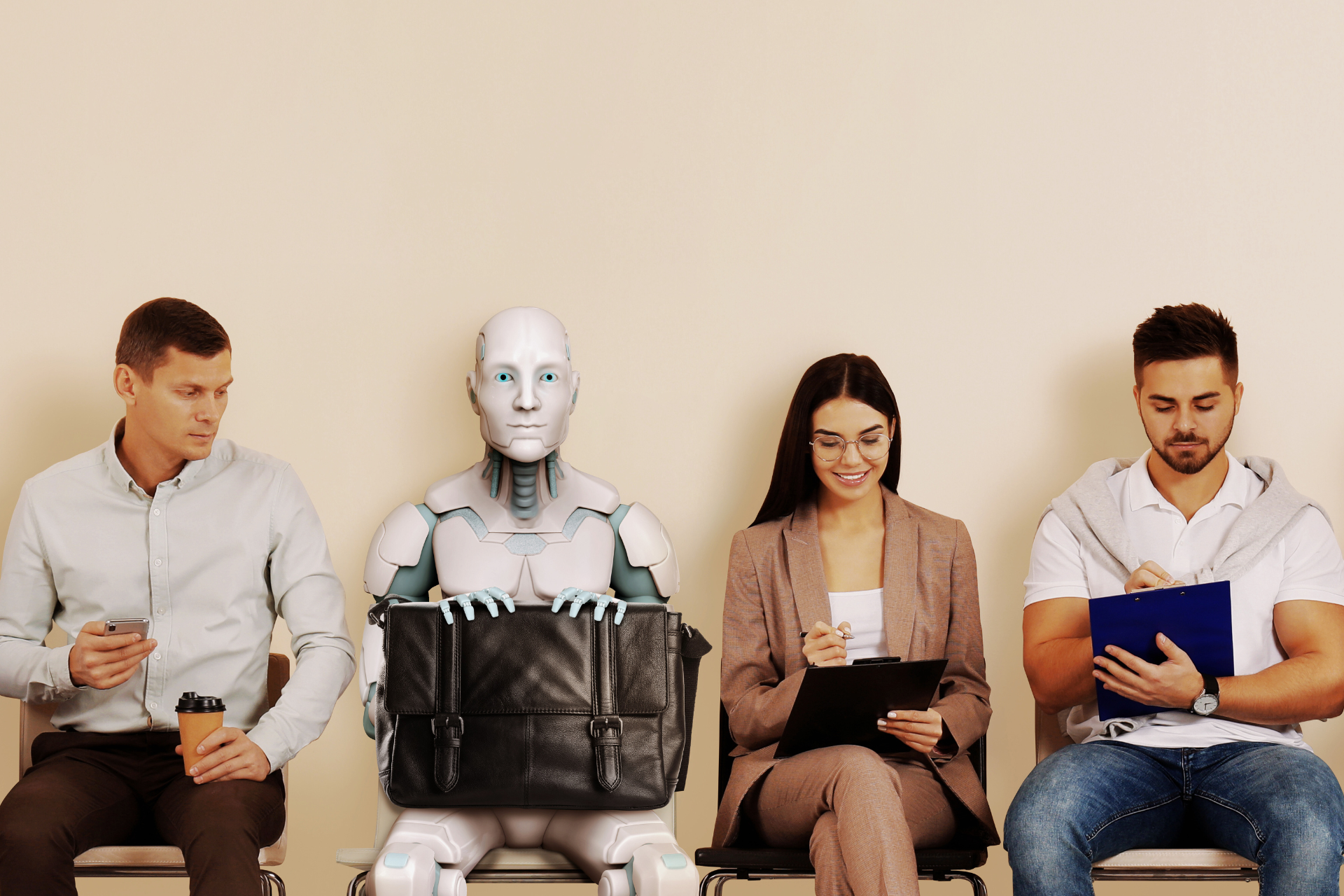
The narrative around artificial intelligence in the workplace tends to fall into two familiar camps. In one corner, you have the doomsayers predicting mass job obsolescence. In the other, you have the optimists who see AI as the great equalizer, a tool that will democratize skills and elevate every employee to new heights of productivity. Both stories are compelling, but both miss the much more complex reality.
The true impact of AI is far more surprising and nuanced. Instead of simply replacing jobs or leveling the playing field, it's set to fundamentally reshape workplace dynamics, creating unexpected winners and losers and altering the very definition of value. The future of work isn't about humans versus machines; it's about how machines will change the relationships between humans. Here are four of the most counter-intuitive takeaways about the AI-driven workplace of tomorrow.
AI won't level the playing field; it'll build a bigger stadium for the superstars.
Contrary to the conventional wisdom that AI will give average employees the tools to shine as brightly as top performers, research suggests the opposite is true: AI will likely widen the performance gap, amplifying the advantages already held by superstars. This happens not because the technology is biased, but because of how top performers interact with it.
The reasons for this phenomenon are rooted in existing work habits and expertise. Superstars tend to embrace and master new tools more quickly and deeply than their peers. More importantly, their "domain expertise" allows them to ask more nuanced questions, better judge the quality of AI-generated output, and reject flawed recommendations. Their work is also typically more systematic and organized. A trait that research shows produces dramatically better results from AI, which responds best to clear, structured inputs.
This creates a "vicious double bind" for average employees and a significant risk for the organization. As the performance gap widens, it threatens to intensify workplace tensions and resentment, undermining the very team cohesion that drives business success. This bias is amplified when it comes to getting credit. A superstar's AI-assisted output is seen as proof of their superior judgment, while an average performer's exceptional work is often dismissed as being the product of the AI itself.
Stars will get the benefit of the doubt: Their AI-enhanced work becomes proof of their superior judgment and strategic thinking. Average performers face the opposite assumption: If the work is exceptional, AI must have done it.
Middle management isn’t disappearing, it’s becoming more personal.
As AI takes over performance tracking, KPI monitoring, and much of the analytical oversight that once defined the role, mid-management becomes more—not less—important. Intelligent systems handle the data, freeing managers from dashboards and reports and repositioning them closer to the people doing the work.
The real shift is from management to development. As AI absorbs coordination and analysis, mid-managers evolve into human-centered leaders; part coach, part HR advocate, part culture carrier. Their value lies in integrating people into teams, transferring skills, understanding psychology, and responding not just to performance issues, but to human needs and motivations. The paradox is that AI doesn’t dehumanize management, it releases it. What was once seen as “middle management” becomes middle development, focused less on numbers and more on the growth, cohesion, and wellbeing of the people behind them.
The gig economy will be supercharged by workers with better AI than yours.
The democratized access to powerful AI is set to fundamentally reshape the talent landscape by supercharging the gig economy. According to Texas A&M University’s Mays Business School, this will shift the balance of power between in-house employees and external contractors in a surprising way.
The key insight is that this gives freelance and gig workers a distinct competitive edge, allowing them to deliver greater value. While a corporate employee might be limited to a single enterprise platform like MS Copilot due to company-wide licensing fees, a gig worker is free to use the best capabilities from OpenAI, Google, Anthropic, and others. This makes them more agile and efficient than their in-house counterparts. This fundamentally alters the talent equation, creating a new strategic imperative for corporations. They must now compete for talent not just with other companies, but with the allure of entrepreneurial freedom supercharged by superior technology. This will force companies to rethink restrictive tech policies or develop new, more flexible models for integrating elite external talent into their core operations.
AI will know your peak productivity hours better than you do.
Before AI can truly transform performance management, leaders must first solve a critical prerequisite: building strong governance to protect employee data and ensure privacy. According to expert Cara Brennan Allamano, only once that foundation of trust is in place can the next era of work begin. In that future, we will move away from relying on self-reported data and toward AI systems that analyze real-time signals to optimize workflows with incredible precision.
For example, an AI system could analyze a salesperson's output and discover their peak performance window is from 3:15 p.m. to 7 p.m. It could then align their workflows with a teammate in Portugal who performs best during complementary hours, creating a highly efficient, data-driven collaboration. This hyper-personalized optimization will be based on analyzing who employees work with, when and where they are most effective, and even optional wellness data they choose to share from their personal devices.
Ultimately, the story of AI's impact is not a simple tale of job replacement but a complex reshaping of workplace dynamics, skill valuation, and organizational design. It will change who gets credit, how teams are managed, where the most powerful talent resides, and how performance is measured. As these powerful tools become more integrated into our work, the ultimate question won't be whether AI can do the job, but how we'll redesign our companies to keep work fundamentally human.